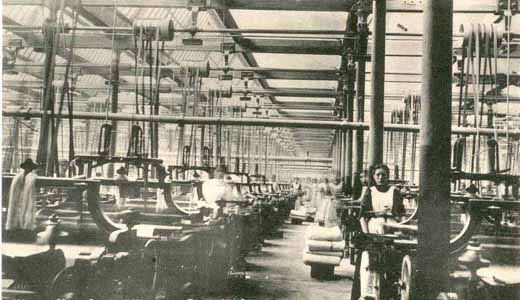
By 1795 the town of Oldham had 22 cotton mills, and by 1805 the number
had risen to 30. Samuel Crompton's own survey of 35 mills in
the Manchester area in 1810 was based on the number of spindles
in use in mills. His
survey shows Oldham's largest mill at that time, owned by John
Lees, had 100 mules, each of which allowed a single operator
to produce 200
times the amount of cotton yarn that a spinner could have made
by hand, and that the quality was superior and consistent.
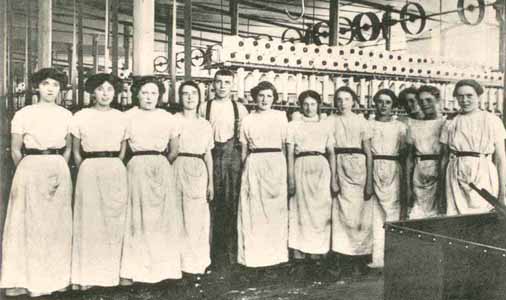
Other local industries flourished. In 1817, James Butterworth's
first history of Oldham recorded 22 firms involved in the hatting
industry,
producing more than 1000 hats a week. Edward Baines, writing
in 1825, also recorded that over 65 mills now existed in Oldham,
and all but
2 were built since 1800, adding that of the 6,982 families
in the parish of Oldham, 6,667 were involved in some way in the
cotton industry.
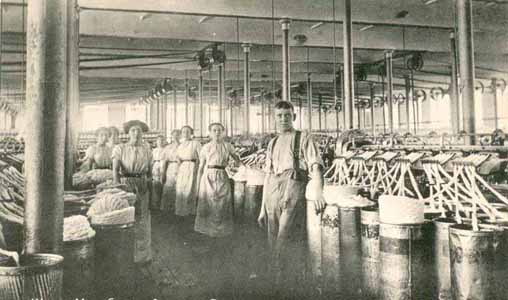
By 1833 over 11,000 people worked in mills - the transformation
of the Oldham cottage industries to factory production had
been virtually
completed. Oldham was now a boom town and the commodity in
demand was cotton cloth.


